
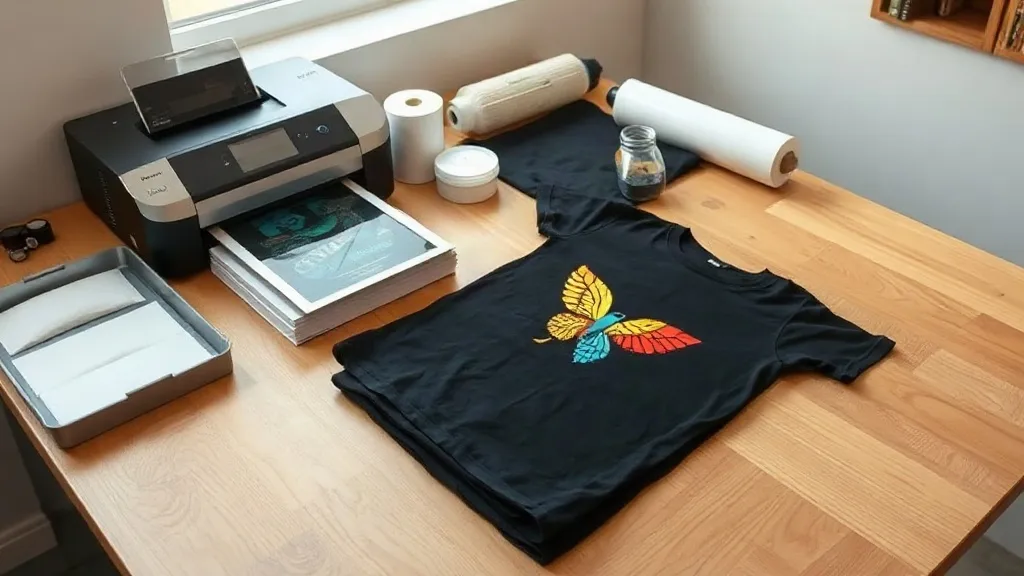
Most people who order dtf transfers for the first time get a quote and quietly wonder whether they are being overcharged. The number on the invoice rarely comes with a breakdown, so it is hard to tell whether you are paying for ink, film, labor, or simply the convenience of someone else doing the work. This guide pulls the curtain back on transfer pricing so you can read a quote, compare suppliers fairly, and plan your per-shirt cost before you commit.
The short version: transfer pricing is built from a handful of inputs that scale with size, quantity, and complexity. Once you know which lever moves the price, you can make smarter choices instead of guessing.
The Four Inputs Behind Every Transfer Quote
Every dtf transfers quote, whether it comes from a large print house or a small shop, is assembled from the same basic ingredients. Suppliers weight them differently, but the ingredients do not change.
1. Film and consumables
Each transfer consumes a sheet of PET film, a layer of adhesive powder, and a measured amount of ink. Film is the quiet cost driver. A full A3 sheet covers far more area than a small chest logo, so a supplier quoting a flat rate per sheet is effectively charging you the same for a 3-inch logo as for a full back print. That is why per-sheet pricing is convenient but rarely the cheapest route for small designs.
2. Ink coverage
White ink is the expensive layer in dtf printing. It is applied thickly to sit under colors on dark garments, and it uses more of it than any other channel. A design that is mostly white text on a black shirt costs more to produce than a dark design on a light shirt, even at identical dimensions. If you are deciding between two versions of a logo, this is worth knowing before you order.
3. Labor and setup
Someone has to prepare the file, nest designs on a sheet to reduce waste, run the printer, powder the wet ink, and cure the result. Small orders carry proportionally more of this labor because setup time does not shrink with quantity. This is the single biggest reason a one-off transfer costs several times more per unit than a run of fifty.
4. Shipping and packaging
Transfers are fragile in the wrong conditions. They need to stay flat, dry, and away from heat. Proper packaging costs money, and so does the shipping itself. A quote that looks cheap per transfer can lose its advantage once freight is added, especially on small orders.
Why the Price Per Transfer Drops So Fast With Quantity
If you have ever collected quotes at 10, 25, and 100 units, you have seen the curve. The first transfer in an order absorbs most of the setup, and each additional one adds mostly material cost. That is why the difference between 10 and 25 units is dramatic while the gap between 100 and 150 is modest.
A practical way to use this: figure out your true annual volume for a given design rather than ordering exactly what you need this month. If a logo will appear on shirts for a year, ordering in larger batches usually beats reordering small quantities every few weeks, provided you store the transfers correctly.
How to Compare Quotes Without Getting Fooled
Comparing suppliers on headline price alone is where most buyers go wrong. Two quotes for the same design can differ by 40 percent and still be perfectly fair, because they are not quoting the same thing. Ask these questions before you decide.
- Is the price per sheet or per design? Per-design pricing usually wins for small logos; per-sheet pricing can win for gang sheets packed with many small elements.
- What size is included? Confirm the maximum print area. A cheap quote for a smaller size is not a cheaper quote.
- Is white ink included in the price? Some suppliers charge extra for the white underbase, which is essential on dark garments.
- What is the minimum order? A low minimum with a high per-unit price can cost more than a higher minimum at a better rate.
- Are shipping and packaging included? Get the landed cost, not the sticker price.
Once you have landed costs for the same specification, the comparison becomes honest. Anything else is guesswork.
Working Out Your Real Cost Per Shirt
The transfer price is only part of what a finished shirt costs you. A realistic per-shirt calculation looks like this:
- Blank garment cost
- Transfer cost per unit
- Labor for pressing, typically a minute or two per shirt
- Packaging if you ship to customers
- A small allowance for misprints and seconds
Add those together and compare against your selling price. Many people are surprised to find that the transfer is often the smallest line item, and that blank selection and press time matter more to their margin than shaving a few cents off the transfer itself.
A worked example
Say a blank costs you six dollars, a mid-size transfer costs two dollars at your order volume, pressing takes two minutes of your time, and packaging runs a dollar. Your landed cost is roughly nine to ten dollars per shirt before any misprint allowance. At a thirty dollar retail price, the transfer is a minor part of the equation. At a fifteen dollar price, every input matters, and that is where careful quote comparison pays off.
Gang Sheets: The Cheapest Route for Small Designs
If your artwork is small, such as a chest logo, sleeve hit, or a set of name tags, a gang sheet is usually the most economical option. You fill a large sheet with as many copies as fit, and the supplier charges for the sheet rather than for each design. The savings come from using the empty space that a single-design order would waste.
The trade-off is that you need to arrange the artwork yourself, which means paying attention to spacing and nesting. Leave a small gap between designs so cutting is clean, and keep everything inside the printable area. A well-packed sheet can cut your effective cost per design substantially.
What Actually Changes the Price of a Design
Two designs of the same physical size can price differently. Here is what moves the needle:
- White coverage. Large white areas on dark garments cost more than fine detail or dark-only artwork.
- Edge complexity. Very fine hairlines and tiny text require more careful production and sometimes a different film.
- Color count. More colors mean more ink, though the effect is smaller than white coverage.
- File quality. A clean, high-resolution file with transparent background reduces prep time. A low-resolution JPEG with a white box around it may add a charge or come back looking rough.
If your budget is tight, simplifying a design slightly, or moving a white-heavy element onto a light garment, can lower cost without hurting the look.
Should You Print In-House Instead?
At high volume with consistent designs, buying a DTF printer can make sense. But be honest about the full picture: the printer itself, ink, film, powder, maintenance, curing equipment, and the learning curve all count. A printer that sits idle still needs cleaning, and clogged heads are an expensive lesson. For most small businesses and hobbyists, ordering transfers is cheaper until volume is genuinely high and steady.
A middle path works well for many: order transfers for designs that sell steadily, and keep the in-house option for rush jobs or one-offs.
Finding a Supplier Worth Reordering From
Price is only half the decision. Consistency is the other half. A supplier who delivers sharp, correctly sized transfers on time is worth more than a slightly cheaper one who sends inconsistent quality. Before committing to a large run, order a small test batch, press it on the garment you actually plan to sell, and wash it a few times. If the transfer holds up and the colors match, you have found a supplier you can build on.
When people search for dtf transfers near me, they are usually looking for faster turnaround and lower shipping. Local pickup can help, but do not sacrifice quality for a few days of speed. A good supplier with clear communication and reliable packaging often beats a nearby one with inconsistent output.
Frequently Asked Questions
Why are my DTF transfers more expensive than I expected?
Small orders carry a disproportionate share of setup labor, and white ink adds cost on dark garments. Check whether your quote is per sheet or per design, confirm the included size, and ask if the white underbase is priced separately. Comparing landed costs at the same specification usually explains the gap.
Is it cheaper to order one large gang sheet or several small orders?
For small designs, a packed gang sheet is almost always cheaper per unit because you pay for the sheet rather than each design. Several small orders repeat the setup cost each time. The exception is when your designs change frequently and you cannot commit to a full sheet.
How many transfers should I order at once?
Estimate your realistic usage over the next few months for a design that sells steadily, then order slightly above that. Transfers store well when kept flat, dry, and away from heat, so a modest buffer reduces reordering costs without much risk.
Do DTF transfers cost more on dark shirts?
Yes, usually. Dark garments require a thick white underbase, which uses more ink and takes more production time. The difference is modest per unit but noticeable across a large order, so factor it into your pricing when planning a dark-colored run.
What should I check before accepting a quote?
Confirm the print size, whether white ink is included, the minimum order, the shipping cost, and the turnaround time. Ask for a sample if you are a new customer. A quote is only useful when it describes the same specification as the one you are comparing it to.